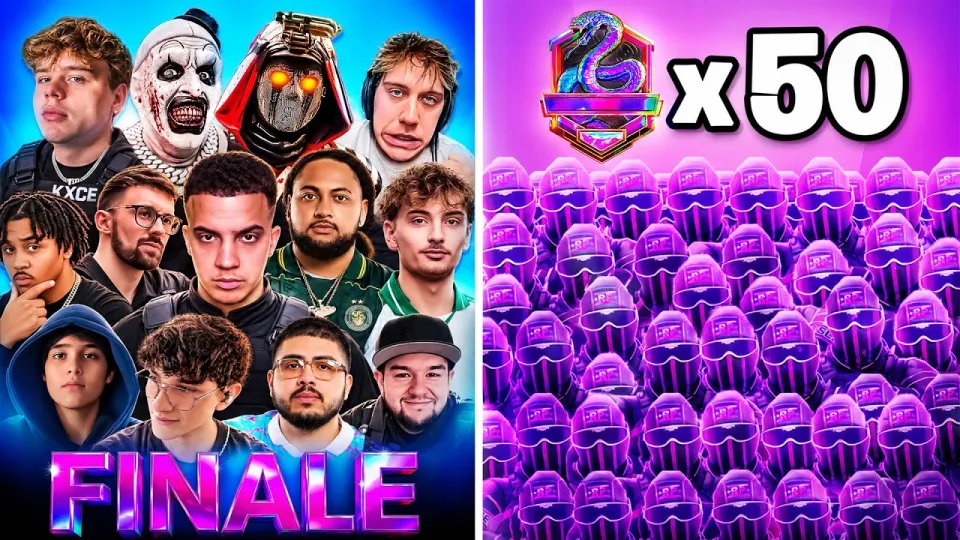
Warzone Iri Invitational proves 50 Iridescents can push streamers to the final game
You can order the same kind of articles for your own video to boost it on YouTube and Google. Just message the Telegram bot @sat_sit_bot. It writes articles around your video, embeds the video and publishes them on popular niche websites (no ads). Your first 50 articles are free.
· based on the channel Swagg
The Warzone Iri Invitational answers the question in its title with a split verdict: a lobby of elite Iridescent-ranked players can absolutely hang with Warzone streamers, but they do not sweep them. Across six solo custom games on Rebirth Island, the Iridescents traded wins with the creator side, forced the finale to be decided late, and turned a $2,000 showmatch into one of the most-watched community events of the season. Swagg streamed the whole thing live, and you can catch his regular ranked and custom lobbies on his Twitch channel.
What the Iri Invitational actually is
The Iri Invitational is a community tournament built on a simple premise: put the highest-ranked non-pro players in Warzone against recognizable streamers and see whether rank means anything without a full squad around you. Swagg assembled roughly 20 creator names and a field of Iridescent grinders for solo custom lobbies on Rebirth Island, the small-map ranked environment where third parties, gas pressure and respawn timing punish anyone who plays on reputation alone. The finale runs six games, and the broadcast cuts between every participant's point of view rather than following a single player, so the story of each match is told from several angles at once.
The money matters less than the format. A $2,000 pot is modest by esports standards, but it is enough to make every placement count and to stop the lobby from turning into a content farm. Solo customs also remove the biggest excuse in Warzone: there is no teammate to blame, no one to cover your rotation, and no one to bail you out of a bad drop. That is exactly why the Iridescent side looked credible — ranked solo queue is the closest thing the game has to this ruleset, and those players have thousands of hours of it.
The players and the shape of the lobby
The roster is the reason the series works: it mixes creators known for entertainment with creators known for raw gun skill, and the Iridescent side is deep enough that no single name carries it. Swagg, Shifty, Hisoka, JoeWo, Metaphor, Kxce, Diablo, Hero, Dongy, Kenner and Ketchup headline the streamer side, with a long tail of Challenger and Iridescent competitors filling out the customs. The full credit list in the description runs past forty names, which tells you how much coordination a six-game, all-POV production takes.
The imbalance the format creates is not skill but familiarity. Streamers know each other's habits from years of scrims and shared lobbies; the Iridescent field is a collection of strangers who mostly know each other by rank. That showed early, when the creator side leaned on positioning and rotations they had rehearsed a hundred times, and it faded as the Iridescents adjusted to the pace of the lobby.
How the six games played out
Game flow in the finale followed a recognizable arc: creator experience took the opening games, the Iridescent side adapted, and the later matches turned into genuine contests decided by endgame decisions rather than raw aim. Rebirth Island compresses everything — the map is small enough that a fight at one POI pulls in teams from two others, and in solo customs that means every engagement is a gamble against a third party. The players who did well were the ones who treated the gas as a weapon and rotated early instead of chasing kills.
Three things decided most of the games:
- Drop discipline. Landing on a contested POI in a 60-player solo lobby is a coin flip; the players who consistently landed clean and looted fast reached the mid-game with plates and killstreaks intact.
- Loadout timing. Getting the meta weapon and perks before the first major rotation is worth more than an early kill, and the Iridescents were often faster to a full loadout than the streamers.
- Endgame positioning. Rebirth's final circles reward whoever holds high ground and a gas mask, not whoever has the most kills on the scoreboard.
The broadcast's all-POV structure is what makes this watchable after the fact: you can follow a single player's game from drop to death and see exactly where a rotation went wrong, which a single-streamer VOD never shows.
The Kenner question and the early exits
The finale pauses for a segment asking whether Kenner is cheating, and that segment became the most argued-about part of the series. Kenner's performances drew suspicion from viewers and opponents alike, and the broadcast addresses it head-on rather than editing around it. In a community event with money on the line, that is the right call — suspicion left unaddressed poisons the result for everyone, and the LAN comparison keeps coming up because online play cannot settle it.
The other controversy is quieter but just as telling: two well-known competitors left before the series finished after taking heavy losses. In a six-game format, leaving early does more damage to the event than any single bad game, because the lobby was built around those names being present for the whole run. Both storylines point at the same thing — the Iri Invitational has outgrown the casual-showmatch bracket and now needs the structure of a real competition.
Why this format is good for Warzone
Warzone's content cycle usually runs on meta complaints and patch reactions; the Iri Invitational runs on a question instead. Ranked play gives the game a measurable hierarchy, and putting that hierarchy against recognizable streamers creates stakes that no ordinary highlight reel can match. The result is a broadcast that works for three different audiences at once: ranked grinders who want to see their bracket validated, streamer fans who want to see their favorite creator tested, and competitive viewers who want a reason to care about Rebirth Island again.
It also produces better evidence than tier lists. Watching an Iridescent player out-rotate a streamer in the final circle says more about the ranked ladder than any debate about aim assist or controller versus mouse and keyboard. The recurring requests for more names next time — and for a LAN version to settle the cheating arguments — are the clearest signal that the format has legs.
Useful links
- Swagg on Twitch — live ranked, customs and community events
- FaZe Nuke Squad merch — Swagg's official apparel line
- Swagg's Discord — custom lobbies, announcements and community games
- Swagg on Twitter — event scheduling and results
- Swagg on Instagram — clips and behind-the-scenes posts
The takeaway from the Iri Invitational finale
The Iri Invitational finale settles its own premise: 50 Iridescents can beat streamers, just not all of them at once, and the six-game series came down to rotations and endgame discipline rather than reputation. The Kenner cheating segment and the early departures are the two loose threads worth watching, because both would be solved by a LAN setting and a stricter format. Swagg built the event as a community showmatch and ended up with something closer to a recurring tournament, with all POVs and a real prize on the line. If you want to see the next one live rather than through highlights, follow Swagg on Twitch and keep an eye on the Discord for sign-ups.
Key takeaways
- Format: 20 Warzone streamers against the best Iridescent-ranked players in solo custom lobbies on Rebirth Island
- Six games across the finale, with all player POVs stitched into one Swagg broadcast
- Prize pool of $2,000 on the line in the first Iri Invitational
- Roster includes Swagg, Shifty, Hisoka, JoeWo, Metaphor, Kxce, Diablo, Dongy, Kenner and Ketchup
- A dedicated segment asks whether Kenner is cheating, and two streamers left early after heavy losses
Source: Can 50 Iridescents Defeat STREAMERS? (FINALE) · Markdown version
Questions & answers
What is the Warzone Iri Invitational?
It is a community tournament organized by Swagg that pits roughly 20 Warzone streamers against a field of top Iridescent-ranked players in solo custom lobbies on Rebirth Island. The finale runs six games with all player POVs broadcast and a $2,000 prize pool. It is designed to test whether ranked standing holds up against experienced creators.
Did the Iridescents actually beat the streamers?
They held their own and won games, but the series was not a clean sweep in either direction. Creator experience took some early matches, and the Iridescent side adapted as the lobby went on, so the finale was decided late rather than dominated by one group.
Why do viewers suspect Kenner of cheating?
Kenner's performances in the customs drew suspicion from both opponents and viewers, and the broadcast dedicates a segment to the question. Online play cannot fully resolve it, which is why calls for a LAN appearance keep coming up as the only convincing test.
Why did some streamers leave before the finale ended?
Two known competitors exited early after taking heavy losses across the six-game format. Leaving mid-series hurts the event because the lobby and the all-POV broadcast were built around those names being present for the full run.